
Overview of the Incident
In a development that has drawn considerable attention, a high-altitude balloon, identified by US officials as a suspected Chinese surveillance asset, reportedly gathered and transmitted data while it was over American airspace. This information, according to sources familiar with the matter, indicates the balloon's capacity to collect both imagery and certain signals intelligence from various US military installations it passed over. The incident, which unfolded over several days earlier this year, sparked a significant diplomatic and national security discussion.
The balloon's trajectory across the continental United States raised questions about its mission and the extent of its capabilities. Initially detected over Alaska, it subsequently drifted across several states, including Montana, a region known for its sensitive military sites, before being shot down off the coast of South Carolina by a US Air Force fighter jet. The downing of the balloon was a culmination of intense observation and strategic decision-making by US defense and intelligence agencies.
Intelligence Collection Capabilities
The core of the recent assessment centers on the balloon's ability to not only observe but also to actively collect and transmit intelligence. This capability reportedly included capturing visual information, or imagery, as well as gathering signals intelligence. Signals intelligence, often referred to as SIGINT, involves the collection of electronic signals and communications, which can provide insights into military operations, communications networks, and technological capabilities. The fact that the balloon was able to send this information back to Beijing underscores a sophisticated level of operation, moving beyond mere passive observation.
While the precise nature and volume of the data transmitted remain subjects of ongoing analysis, the implication is that the intelligence gathered could offer China valuable insights into US military infrastructure and activities. This potential for real-time or near real-time data transmission adds a new dimension to the understanding of the incident, suggesting a more active and aggressive intelligence-gathering posture than might be initially assumed from a simple observational platform.
Response and Aftermath
The US government's response to the balloon's presence evolved as more information became available. Initially, the decision was made not to shoot down the balloon over land due to concerns about potential harm to civilians and property from falling debris. Instead, it was closely monitored by intelligence assets, allowing for a detailed study of its characteristics and capabilities. This period of observation was critical for understanding its operational parameters and potential intelligence-gathering methods.
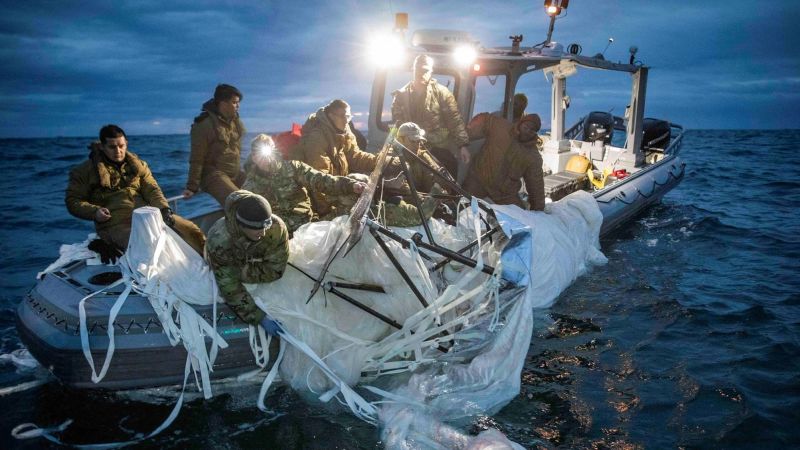
Following the balloon's downing, recovery efforts were initiated to retrieve its components from the Atlantic Ocean. These components are currently undergoing extensive analysis by intelligence agencies, with the aim of fully understanding the technology employed, the types of sensors onboard, and the full extent of the data it was capable of collecting and transmitting. The findings from this analysis are expected to provide a more comprehensive picture of the incident and inform future counter-surveillance strategies.
Broader Implications for International Relations
The incident has had significant repercussions for US-China relations, which were already strained. The US condemned the action as a clear violation of its sovereignty and international law, leading to the postponement of a high-level diplomatic visit to Beijing. China, in turn, maintained that the balloon was a civilian weather research airship that had inadvertently drifted off course, a claim that US officials have largely dismissed as inconsistent with the balloon's observed capabilities and trajectory.
This event has further intensified scrutiny of China's global surveillance activities and its broader strategic ambitions. It has prompted renewed discussions among US allies and partners about the challenges posed by China's expanding intelligence capabilities and the need for coordinated responses to such incidents. The ongoing analysis of the balloon's recovered components and the intelligence it may have transmitted will likely continue to shape the narrative and policy responses in the coming months, influencing the delicate balance of international relations.
Source: CNN
Related Articles
 politics
Senator John Fetterman Details Personal Battle with Depression Post-Election Victory
 politics
Finland's Parliamentary Election Concludes with Shift in Political Landscape
 politics
French Minister's Playboy Interview Ignites Political Debate Amid National Crisis
 politics