
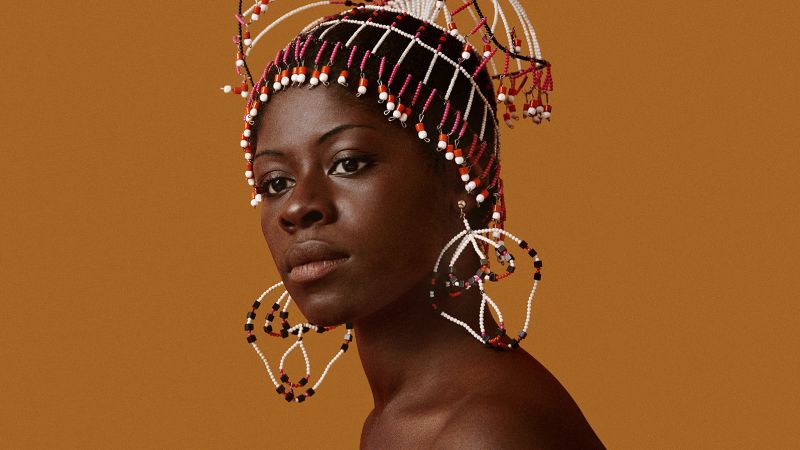
A Legacy Defined by 'Black Is Beautiful'
Kwame Brathwaite, a seminal photographer and activist whose work became synonymous with the 'Black Is Beautiful' movement, passed away on April 1 at the age of 85. His death was confirmed by his son, Kwame Brathwaite Jr., who shared the news on Instagram, describing his father as 'the patriarch of our family, our rock and my hero.' Brathwaite's enduring contributions to visual culture and his unwavering commitment to affirming Black identity have garnered renewed interest in recent years, culminating in a significant retrospective organized by the Aperture Foundation. This exhibition debuted in 2019 at the Skirball Cultural Center in Los Angeles, subsequently touring across the United States, cementing his place in art history.
Early Life and Photographic Awakening
Born in 1938 to Barbadian immigrants in Brooklyn, New York, Brathwaite's early life saw his family relocate first to Harlem and then to the South Bronx by the time he was five. His artistic journey began at the School of Industrial Art, now known as the High School of Art and Design. Two pivotal moments are often cited as catalysts for his pursuit of photography. The first occurred in August 1955, when a 17-year-old Brathwaite was deeply affected by David Jackson’s powerful photograph of Emmett Till's brutalized body in an open casket. The second inspiration struck in 1956. After co-founding the African Jazz Arts Society and Studios (AJASS) with his brother Elombe, Brathwaite witnessed a photographer capturing images in a dimly lit jazz club without a flash. This observation sparked an epiphany, revealing the potential for capturing atmosphere and mood through available light.
Equipped with a Hasselblad medium-format camera, Brathwaite meticulously honed his craft, learning to manipulate limited light to enhance the narrative depth of his images. He further developed a distinctive darkroom technique in his Harlem apartment, which allowed him to enrich and deepen the portrayal of Black skin tones in his photographs. Throughout the 1950s and '60s, he became a chronicler of the jazz scene, photographing luminaries such as Miles Davis, John Coltrane, and Thelonious Monk. In a 2017 interview with Aperture Magazine, Brathwaite articulated his photographic philosophy: 'You want to get the feeling, the mood that you’re experiencing when they’re playing. That’s the thing. You want to capture that.'
Challenging Beauty Standards: The Grandassa Models
By the early 1960s, Brathwaite and AJASS began to actively challenge the prevailing Eurocentric beauty standards through his photography and organizational efforts. This led to the groundbreaking concept of the Grandassa Models. These young Black women were photographed by Brathwaite in a manner that celebrated and accentuated their natural features, directly countering the dominant imagery of the time. In 1962, AJASS organized 'Naturally ’62,' a pioneering fashion show held at Harlem's Purple Manor club, featuring the Grandassa Models. This event proved so successful that it became a regular fixture, continuing annually until 1992. In 1966, Brathwaite married Sikolo, one of the Grandassa Models he had met the previous year when he approached her on the street to ask for her portrait. Their marriage endured for the remainder of his life.
Documenting Black Culture Beyond Jazz
As the 1970s arrived, Brathwaite's photographic focus expanded beyond jazz to encompass a broader spectrum of Black popular music and cultural events. In 1974, he accompanied the Jackson Five on their tour of Africa, documenting their journey. The same year, he captured the historic 'Rumble in the Jungle' boxing match between Muhammad Ali and George Foreman in what is now the Democratic Republic of Congo. During this period, Brathwaite also received commissions to photograph a pantheon of music legends, including Nina Simone, Stevie Wonder, Sly and the Family Stone, and Bob Marley, further solidifying his role as a visual historian of Black artistic expression.
Continuing Influence and Recognition
Over the subsequent decades, Brathwaite continued to refine his photographic approach, always guided by the foundational principles of the 'Black Is Beautiful' ethos. His work experienced a resurgence of interest in the 2010s. In 2016, he joined the roster of Philip Martin Gallery in Los Angeles, and he remained active as a photographer into his late 70s, notably shooting artist and stylist Joanne Petit-Frère for The New Yorker in 2018. A 2021 profile in T Magazine, published as his retrospective traveled to the Blanton Museum of Art in Austin, Texas, acknowledged his declining health, which prevented him from being interviewed for the article.
Brathwaite's profound impact on photography and cultural representation continues to be recognized. An exhibition titled 'Kwame Brathwaite: Things Well Worth Waiting For' is currently on display at the Art Institute of Chicago, offering another opportunity to experience his powerful and influential body of work until July 24. His legacy as a visual architect of Black pride and self-affirmation remains indelible.
Source: Kwame Brathwaite, photographer of 'Black is Beautiful' movement, dies at 85
Related Articles
 culture
Shania Twain Advocates for Enhanced Equity and Inclusivity in Country Music
 culture
Mark Hamill Shares Insights on Luke Skywalker's Legacy and Potential Spinoffs with Jim Acosta
 culture
Emma Heming Willis Marks Daughter Mabel's 11th Birthday with Heartfelt Family Tribute
 culture