
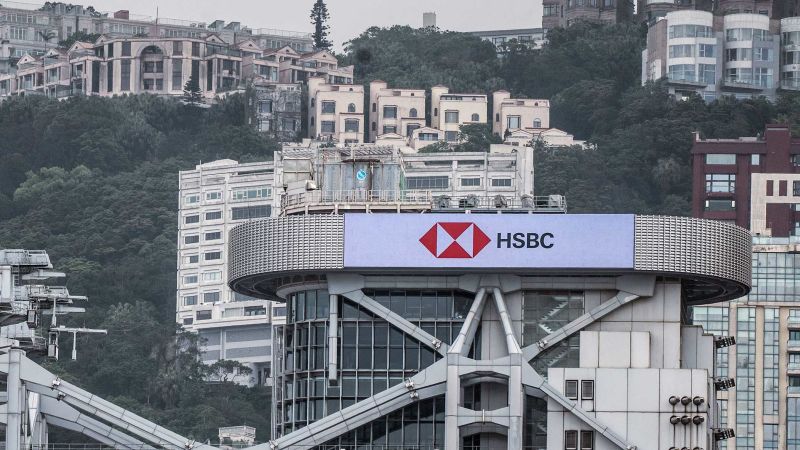
HSBC Leadership Confronts Shareholder Demands for Business Restructuring
In a recent informal shareholder meeting held in Hong Kong, HSBC's leadership, including Chairman Mark Tucker and CEO Noel Quinn, faced intense scrutiny from investors regarding the bank's future direction. The session was dominated by discussions surrounding proposals to overhaul the bank's structure, particularly the idea of spinning off its lucrative Asian business. This comes amidst ongoing pressure from a segment of shareholders who believe a breakup would unlock greater value for investors.
Both Tucker and Quinn reiterated the board's firm opposition to a resolution slated for the upcoming annual general meeting in May. This resolution seeks to compel HSBC to devise a plan for either divesting or reorganizing its Asian operations, which currently represent the bank's primary source of profitability. The executives emphasized that the board's stance against such a split was unanimous, asserting that it would ultimately be detrimental to shareholder interests.
"It would not be in your interest to split the bank," Tucker stated, highlighting that previous internal reviews of restructuring options had concluded that such moves would "materially destroy value for shareholders," including the crucial aspect of dividend payouts. He further affirmed, "Our strategy is working. Our current strategy is moving dividends up."
The Push for a Breakup: Shareholder Concerns
Calls for HSBC to separate its Asian business have intensified over the past year. A significant number of shareholders in Hong Kong, where HSBC holds a prominent position in many retail investment portfolios, argue that the London-headquartered bank's overall performance has been hampered by its operations in other geographical regions. Quinn directly addressed these concerns, stating that "our profits in Hong Kong and the UK are no longer being dragged down by underperformance elsewhere. The group is performing well as a whole."
When pressed further by a shareholder, Quinn elaborated that a breakup of the bank would likely lead to "significant revenue loss." He attributed this to the substantial portion of HSBC's business that relies on cross-border transactions, which would be complicated by a fragmented structure.
Another significant point of contention for investors was the bank's decision to suspend its dividend in 2020 at the behest of British regulators. Many shareholders contend that if the bank's Asian activities were separated, Hong Kong-based investors would no longer be subject to regulatory directives from other jurisdictions. Christine Fong, a district council member in Hong Kong, represented approximately 500 small shareholders who were directly impacted by the dividend cancellation. She highlighted the reliance of ordinary citizens, including "street hawkers, taxi drivers or teachers," on these dividends for essential expenses such as mortgages, insurance, and school fees. Fong, despite the reinstatement of dividends in 2021 (albeit at a lower rate), has joined the chorus advocating for a vote in favor of the Asian spin-off proposal.
Ken Lui, an activist shareholder in Hong Kong and the architect of the resolution, remains steadfast in his campaign for support. He informed reporters that while the resolution requires a 75% majority vote to pass in May, "nothing is impossible." Lui, who reportedly holds a substantial stake of HKD 100 million ($12.7 million), outlined plans for his team to engage in "targeted outreach to institutional shareholders to present our case and gain their support." Additionally, his group intends to canvass 18 districts across Hong Kong to encourage HSBC shareholders to exercise their voting rights and safeguard their interests.
Pressure from Major Shareholder: Ping An
Adding to the internal shareholder pressure, HSBC also faces demands from its largest shareholder, Ping An, China's largest insurer, which holds an 8% stake in the bank. Ping An has publicly supported calls for HSBC to re-evaluate its organizational structure. In statements released last November, Huang Yong, chairman of Ping An's asset management arm, indicated that the insurer would "support any initiatives including a spinoff that are conducive to improve HSBC’s performance and value."
Sources familiar with the matter suggest that Ping An's position remains unchanged. The insurer is reportedly advocating for HSBC to explore a reorganization aimed at enhancing its valuation and streamlining its global regulatory compliance. While Ping An has not endorsed a specific approach, it has signaled its willingness to back any initiative, including an Asian business spin-off, that could boost the bank's stock performance or overall value. As of now, Ping An has not publicly disclosed its voting intentions for the upcoming general meeting.
Addressing Recent Banking Sector Turmoil and SVB UK Acquisition
During the meeting, HSBC's executives were also questioned regarding the bank's recent acquisition of the British arm of Silicon Valley Bank (SVB) following the unexpected collapse of its U.S. parent company. The purchase, valued at £1 ($1.20), occurred swiftly last month. Critics raised concerns about the speed of the transaction and HSBC's ability to conduct adequate due diligence on SVB UK's client base. Fong, for instance, questioned whether HSBC had thoroughly reviewed the financial statements of SVB clients to assess their repayment capabilities.
Quinn and Tucker defended the acquisition, characterizing it as a strategic business opportunity that provided the bank with access to hundreds of innovative startup clients. They dismissed suggestions that management lacked sufficient time for proper due diligence. Tucker also offered his perspective on the recent instability within the banking sector, stating that he did not anticipate an "immediate impact" on HSBC. He acknowledged that the share prices of all banks had been suppressed in the aftermath of the collapse of several smaller regional banks and the takeover of Credit Suisse. However, he expressed his belief that these developments did not constitute a "systemic risk" to the broader sector, though he did foresee "a period of uncertainty" before market confidence fully stabilized.
Source: CNN Business
Related Articles
 business
OPEC+'s Unexpected Production Cut: Analyzing the Potential Impact on Global Oil Prices
 business
Corporate Leaders Express Frustration Over Societal Expectations on Gun Control
 business
China Renaissance Halts Trading, Postpones Earnings Amid Founder's Absence
 business