
Context of Cross-Strait Relations and US Diplomacy
The geopolitical landscape surrounding Taiwan is consistently under international observation, particularly concerning its relationship with mainland China and its interactions with the United States. Taiwan, officially the Republic of China, operates as a self-governing democracy, a status that Beijing views as a breakaway province destined for reunification, by force if necessary. The United States maintains a policy of "strategic ambiguity" towards Taiwan, acknowledging the "One China" policy while also providing defensive capabilities to the island under the Taiwan Relations Act. This delicate balance often leads to heightened tensions when high-profile interactions occur between Taiwanese and American officials.
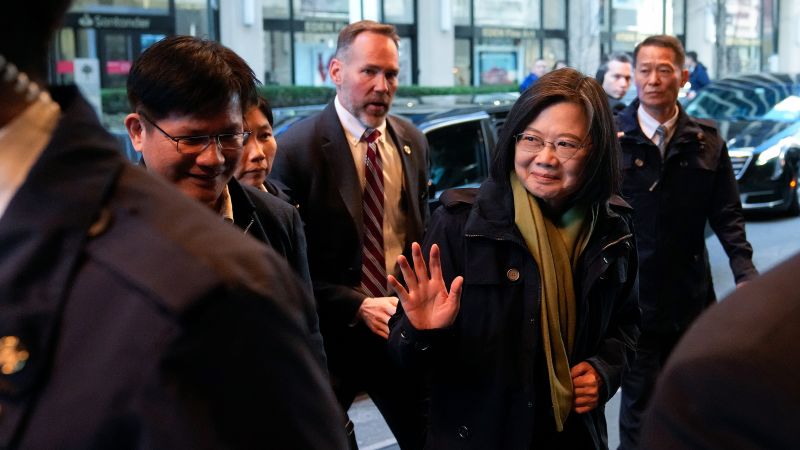
Recent events, specifically an anticipated meeting between Taiwan's President and the U.S. House Speaker in California, have once again brought these complex dynamics to the forefront. This interaction, while not unprecedented, carries significant weight given the historical context and the potential for reactions from Beijing. The memory of a similar high-level visit last year, which prompted a robust response from mainland China, is still fresh in the minds of international observers and policymakers alike. This backdrop underscores the sensitivity of such diplomatic engagements and the careful navigation required by all parties involved.
Historical Precedents and Chinese Responses
The People's Republic of China has historically reacted strongly to perceived challenges to its sovereignty over Taiwan, especially when these challenges involve high-level diplomatic exchanges with countries that formally recognize the "One China" principle, such as the United States. A notable instance occurred last year when a high-ranking U.S. official visited Taipei. This visit was met with an immediate and significant show of force from Beijing, including extensive military drills in areas surrounding Taiwan, economic sanctions, and a suspension of certain diplomatic dialogues with the United States. These actions were widely interpreted as a clear message of disapproval and a demonstration of China's resolve to defend its territorial claims.
The scale and intensity of that response served as a stark reminder of the potential consequences of such interactions. It also highlighted Beijing's willingness to leverage its economic and military might to exert pressure and deter what it perceives as foreign interference in its internal affairs. Consequently, any subsequent high-level meetings involving Taiwanese officials and their international counterparts are invariably viewed through the lens of this recent history, with analysts and governments anticipating a range of potential responses from Beijing.
Economic and Political Stakes for Beijing
While China's rhetorical stance and past actions suggest a strong inclination to retaliate against perceived slights regarding Taiwan, the current geopolitical and economic climate presents a more nuanced situation for Beijing. The global economy is facing various headwinds, and China itself is navigating its own domestic economic challenges. In this context, a repeat of last year's aggressive and economically disruptive response might carry greater costs for Beijing than before. Extensive military exercises, while demonstrating resolve, can also disrupt international trade routes and supply chains, potentially impacting China's own economic interests and its standing as a responsible global actor.
Furthermore, China is engaged in various diplomatic efforts on multiple fronts, seeking to project an image of stability and cooperation. An overly aggressive reaction to a relatively routine transit visit could undermine these broader diplomatic objectives and alienate key trading partners. The balance between asserting its claims over Taiwan and maintaining a stable international environment for its economic growth is a delicate one, and Beijing must carefully weigh these factors when formulating its response. The international community, while acknowledging China's position, also seeks stability in the Taiwan Strait, and disproportionate actions could draw widespread condemnation and further complicate international relations.
Taiwan's Strategic Calculus and International Support
For Taiwan, these high-profile interactions with international partners, particularly the United States, are crucial for enhancing its international visibility and bolstering its security. Despite not being recognized as a sovereign state by most of the world's governments, Taiwan actively seeks to strengthen its democratic institutions and secure its place on the global stage. Meetings with high-ranking officials from influential nations serve to demonstrate Taiwan's resilience and its commitment to democratic values, while also signaling international support for its de facto independence.
However, Taiwan also understands the sensitivities involved and aims to conduct these diplomatic engagements in a manner that avoids unnecessary provocation while still achieving its strategic objectives. The pursuit of international recognition and security assistance is a delicate balancing act, requiring careful consideration of both the potential benefits and risks. The ongoing dialogue between Taiwan and its international partners is a testament to the complexities of modern geopolitics and the enduring quest for self-determination in the face of significant external pressures.
Future Outlook and Potential Scenarios
The immediate future concerning cross-strait relations and Taiwan's international engagements remains uncertain. While a direct military confrontation is generally considered a low probability in the immediate term, the potential for continued diplomatic friction, economic pressure, and increased military posturing remains high. Beijing's response to the recent U.S. visit will be closely analyzed for clues regarding its evolving strategy towards Taiwan and its willingness to absorb potential economic and diplomatic costs in pursuit of its objectives.
The international community will continue to advocate for peaceful resolution of cross-strait differences and uphold the principles of international law. The United States, while adhering to its "One China" policy, is also likely to continue its robust unofficial relationship with Taiwan, providing support for its defense and democratic institutions. The interplay of these various factors will shape the trajectory of cross-strait relations in the coming months and years, requiring careful diplomacy and strategic foresight from all parties involved.
Source: Original Article
Related Articles
 world
world
McLaren and Red Bull Challenge Monaco GP Results Over 'Tricky Precedent'
 world
world
Haggis: A Culinary Divide Between Scotland and the United States
 world
world
Investigating the Potential Link Between Drinking Water Lithium Levels and Autism Spectrum Disorder Risk
 world
world