
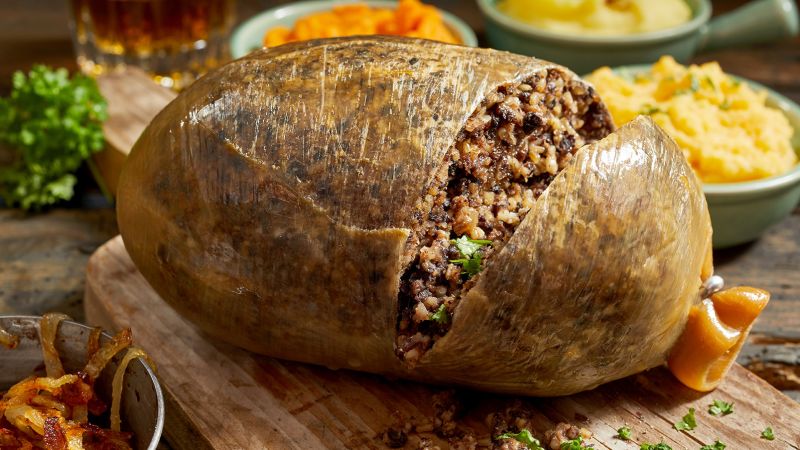
A Culinary Enigma: Haggis's Journey from Offal to Delicacy
Haggis, often described as Scotland's national dish, presents a fascinating case study in culinary perception and regulation. While celebrated in its homeland as a staple of both traditional and high-end cuisine, this unique preparation of sheep's offal encounters significant hurdles, particularly in the United States, where its import has been prohibited for decades. This disparity highlights a broader conversation about food safety standards, cultural heritage, and the global movement of traditional foodstuffs.
The dish itself is a hearty pudding composed of sheep's pluck (heart, liver, and lungs), minced with onion, oatmeal, suet, spices, and salt, traditionally encased in the animal's stomach. Modern preparations often utilize an artificial casing. Its origins are deeply rooted in Scottish history, emerging as a practical and economical way to utilize all parts of a sheep, particularly after a hunt. Over centuries, it evolved from a simple peasant food to a symbol of Scottish identity, famously immortalized by the poet Robert Burns in his 1786 'Address to a Haggis'.
The American Ban: A Matter of Regulation
The primary reason for the United States' ban on haggis stems from a 1971 regulation by the U.S. Department of Agriculture (USDA) that prohibits the import of food products containing sheep lungs. This regulation was implemented due to concerns about transmissible spongiform encephalopathies (TSEs), such as scrapie, a fatal, degenerative disease affecting the nervous systems of sheep and goats. While scrapie is not known to affect humans, the precautionary principle led to the ban, which remains in effect despite lobbying efforts from Scottish food producers and cultural advocates.
Critics of the ban often point out that other parts of the sheep, including the liver and heart, are freely imported and consumed in the U.S. They argue that modern farming practices and rigorous inspection standards in Scotland mitigate the risks associated with lung consumption. Furthermore, the ban is sometimes viewed as an outdated restriction that impedes cultural exchange and limits consumer choice for those seeking an authentic Scottish culinary experience.
Haggis in Scotland: A Culinary Staple and Fine-Dining Star
In Scotland, haggis is far from a mere novelty. It is a deeply ingrained part of the national diet and cultural fabric. Beyond Burns Suppers, where it is the undisputed centerpiece, haggis is enjoyed year-round. It features prominently on restaurant menus, ranging from traditional pubs to Michelin-starred establishments. Chefs in Scotland have innovated with haggis, incorporating it into contemporary dishes such as haggis bonbons, haggis-stuffed chicken, or even vegetarian versions that substitute pulses and vegetables for the meat.
The preparation and presentation of haggis in Scotland often involve a sense of ceremony and pride. Its rich, savory flavor profile, often accompanied by neeps (turnips) and tatties (potatoes), provides a comforting and satisfying meal. The texture, a crumbly yet moist consistency, is distinct and contributes to its unique appeal. For many Scots, haggis represents more than just food; it embodies resilience, heritage, and a connection to their ancestral past.
Attempts at Reversal and Future Prospects
Over the years, there have been numerous attempts and discussions between Scottish and U.S. authorities to lift the ban. These efforts have involved proposals for stricter inspection protocols, specific certification for exported haggis, and arguments highlighting the advancements in food safety. However, the USDA has maintained its stance, citing ongoing concerns and the difficulty of ensuring that sheep lungs from all potential sources meet their stringent criteria.
While the full, traditional haggis remains inaccessible in the U.S., some Scottish producers have developed alternative versions that comply with American regulations. These typically omit the sheep's lungs, replacing them with other permitted ingredients, or utilize different casings. While these adaptations allow for a taste of haggis in America, many purists argue that they do not fully capture the authentic flavor and texture of the original dish.
The saga of haggis between Scotland and the United States serves as a compelling illustration of how national food regulations, historical context, and cultural identity intersect. While the ban persists, the enduring popularity of haggis in Scotland underscores its status as a cherished culinary icon, a testament to its unique flavor and profound cultural significance.
Source: This boiled bag of offal is banned in the US. In Scotland it's a fine-dining treat
Related Articles
 world
world
McLaren and Red Bull Challenge Monaco GP Results Over 'Tricky Precedent'
 world
world
Investigating the Potential Link Between Drinking Water Lithium Levels and Autism Spectrum Disorder Risk
 world
world
Syrian Refugee Elected Mayor in Germany, Highlighting Integration Success
 world
world