
A Miraculous Survival Amidst Devastation
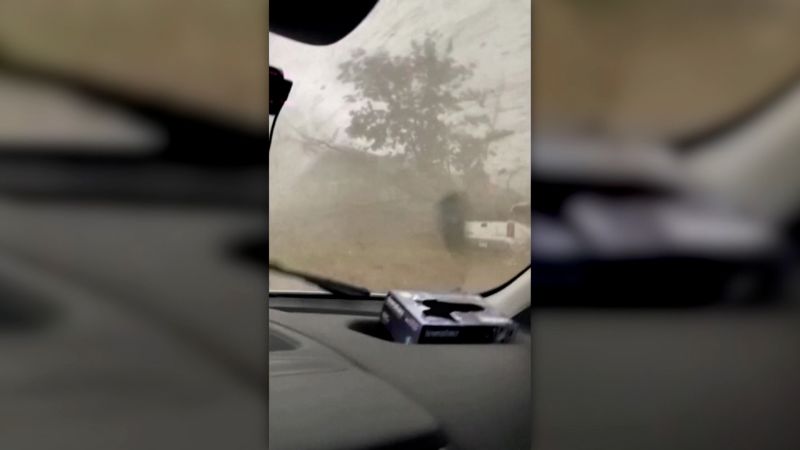
In the aftermath of a devastating tornado that tore through parts of Arkansas, an extraordinary account of survival has emerged from Little Rock. Cody Coombes, a local pest control technician, found himself directly in the path of the powerful storm and made the unusual decision to shelter inside his company vehicle, a move that ultimately saved his life.
The National Weather Service (NWS) confirmed that the tornado, classified as an EF-3, brought estimated peak winds of 165 miles per hour. This formidable weather event inflicted significant damage across Pulaski and Lonoke counties, leaving a trail of destruction and causing multiple fatalities. The storm's ferocity was such that it claimed one life in North Little Rock and four additional lives in Wynne, underscoring the extreme danger posed by such atmospheric phenomena.
The Moment of Impact
Coombes's experience offers a vivid, firsthand perspective on the raw power of a tornado. As the storm approached, he was reportedly performing his duties when conditions rapidly deteriorated. With little time to seek conventional shelter, his van became his impromptu refuge. While the specifics of the van's location and the exact timing of his decision are still being detailed, his choice proved to be critical. Eyewitness accounts from individuals caught in similar situations often describe a deafening roar, a sensation akin to a freight train, accompanied by immense pressure changes and flying debris. Coombes's survival suggests that despite the van's inherent vulnerability, it provided just enough structural integrity and enclosure to withstand the most direct impacts of the tornado's core.
Widespread Impact and Recovery Efforts
The EF-3 tornado was part of a larger system of severe weather that impacted multiple states, causing widespread power outages, property damage, and disrupting daily life for thousands. Emergency services, first responders, and community volunteers quickly mobilized in the affected areas of Pulaski and Lonoke counties to commence search and rescue operations, provide medical aid, and assess the full extent of the damage. The governor declared a state of emergency, enabling the deployment of additional resources and support for the recovery process.
Local authorities and meteorological experts are conducting thorough post-storm analyses to map the tornado's precise path, evaluate the damage intensity, and gather data that could aid in future disaster preparedness and response strategies. Such detailed assessments are crucial for understanding the dynamics of these extreme weather events and for improving early warning systems.
The Science Behind EF-3 Tornadoes
An EF-3 tornado, according to the Enhanced Fujita Scale, is characterized by severe damage. Structures with good foundations can have their roofs and some walls torn off, trains may be overturned, and most trees in forests can be uprooted or snapped. Vehicles, like Coombes's van, can be lifted and thrown. The 165 mph wind speeds reported in this incident are well within the range for an EF-3, which spans from 136-165 mph. These high wind speeds create extreme suction and aerodynamic forces capable of lifting heavy objects and disintegrating lighter ones, making survival in the direct path incredibly challenging.
"The sound was indescribable, like nothing I've ever heard before. I just held on, hoping for the best," a survivor might recount, echoing the sentiments likely experienced by Coombes. These personal stories serve as powerful reminders of the unpredictable and destructive nature of tornadoes and the resilience of those who endure them.
Community Resilience and Looking Forward
The incident involving Cody Coombes, while remarkable for his survival, also highlights the broader narrative of community resilience in the face of natural disaster. In the days and weeks following such events, communities often come together to support those who have lost homes, businesses, or loved ones. The long road to recovery involves not only physical reconstruction but also emotional healing and the strengthening of community bonds.
As Arkansas begins the arduous process of rebuilding, the story of Coombes's survival serves as a testament to both the terrifying power of nature and the human will to endure. It also underscores the importance of heeding weather warnings and having a plan in place for severe weather, even if sometimes, as in Coombes's case, improvisation becomes a necessary part of that plan.
Source: CNN
Related Articles
 world
world
McLaren and Red Bull Challenge Monaco GP Results Over 'Tricky Precedent'
 world
world
Haggis: A Culinary Divide Between Scotland and the United States
 world
world
Investigating the Potential Link Between Drinking Water Lithium Levels and Autism Spectrum Disorder Risk
 world
world