
Pioneering Deep-Sea Exploration Reveals New Life
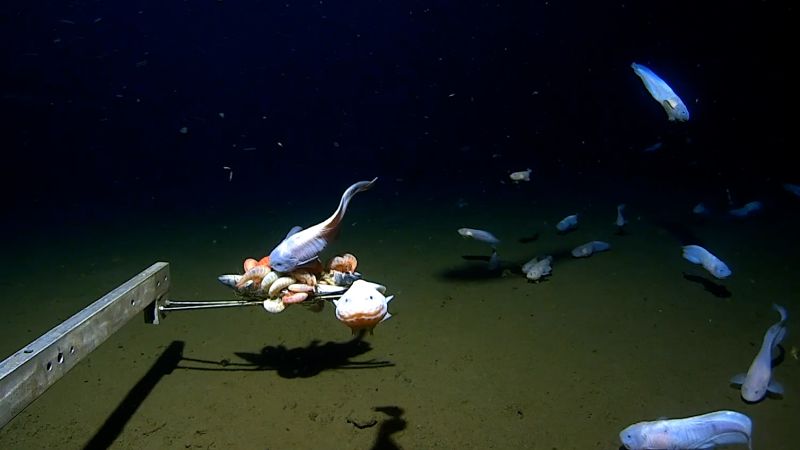
In a significant breakthrough for marine biology, an expedition conducted in the abyssal trenches off the coast of Japan has yielded remarkable footage of an undescribed species of snailfish. This discovery is particularly notable as the fish was observed at an astonishing depth exceeding 27,000 feet (approximately 8,336 meters), establishing a new benchmark for the deepest-dwelling fish ever recorded on camera. The successful documentation of this creature provides invaluable insights into the adaptive capabilities of life in extreme environments, challenging previous assumptions about the limits of vertebrate existence in the ocean's deepest realms.
The Expedition and its Findings
The scientific endeavor involved a collaborative team utilizing advanced sub-aquatic technology to explore the formidable deep-sea trenches. These geological formations are characterized by immense pressures, perpetual darkness, and near-freezing temperatures, conditions that typically render them inhospitable to most complex life forms. The researchers deployed specialized deep-sea landers equipped with cameras and bait, meticulously designed to withstand the crushing pressures of the hadal zone – the deepest parts of the ocean. It was through these sophisticated instruments that the elusive snailfish was captured on film, navigating its extreme habitat with apparent ease.
The footage not only confirms the presence of fish at unprecedented depths but also offers a glimpse into their behavior and physiology. Snailfish, belonging to the family Liparidae, are known for their gelatinous bodies, which are thought to be a key adaptation to high-pressure environments. Their soft, boneless structures allow them to withstand pressures that would crush most other fish species. This particular species, yet to be formally classified, exhibited characteristics typical of deep-sea dwellers, including a lack of scales and a body composition optimized for buoyancy and survival under extreme hydrostatic pressure.
Adapting to the Abyss: The Snailfish's Secrets
The survival of any organism at depths exceeding 27,000 feet is a testament to extraordinary evolutionary adaptations. The pressure at such depths is equivalent to placing approximately 1,000 elephants on a small car, creating an environment where proteins denature and cell membranes become rigid. Snailfish have evolved several strategies to counteract these challenges:
- Osmolyte Production: They produce high concentrations of osmolytes, such as trimethylamine N-oxide (TMAO), which stabilize proteins and prevent them from denaturing under extreme pressure.
- Flexible Skeletons: Their skeletons are largely cartilaginous and flexible, lacking the dense, calcified bones that would be brittle and prone to collapse under immense pressure.
- Gelatinous Bodies: The soft, gelatinous nature of their tissues provides structural integrity without the need for rigid components, further aiding pressure resistance.
- Metabolic Efficiency: Deep-sea environments are resource-scarce. Snailfish likely possess highly efficient metabolisms, allowing them to thrive on limited food availability.
The discovery of this new species at such an extreme depth pushes the known boundaries of vertebrate life and opens new avenues for research into the physiological mechanisms that enable survival in the hadal zone. Scientists will now undertake further studies to analyze the footage, collect specimens if possible, and formally describe the new species, which will contribute significantly to our understanding of biodiversity in the deepest parts of the ocean.
Implications for Marine Science and Conservation
This groundbreaking observation has profound implications for marine science. It underscores the vast unexplored nature of the ocean's depths and highlights the potential for discovering entirely new forms of life in these remote ecosystems. The resilience of these deep-sea creatures also provides valuable insights into the fundamental principles of life and adaptation. Furthermore, as human activities increasingly impact even the most remote parts of the planet, understanding these unique environments and their inhabitants becomes crucial for conservation efforts.
The deep-sea trenches, once thought to be barren and lifeless, are continuously revealing themselves to be dynamic and biologically rich environments. Each new discovery, like that of this record-breaking snailfish, serves as a powerful reminder of the ocean's mysteries and the importance of continued exploration and protection of these critical habitats.
Source: Original Article